
Published: January 2026 Reading Time: 6 minutes
You show up to your 6 AM CrossFit class at a box near Arapahoe Road in Centennial, or your evening F45 session in Greenwood Village. You do a quick 2-minute jog on the runner, maybe some leg swings, and jump straight into the workout. Five minutes later, you’re landing box jumps or hitting heavy squats, and your knees feel off—clicking, slightly unstable, like they’re not quite ready.
You’ve heard the horror stories. A training partner who tore their meniscus during a workout and needed surgery. Another athlete who developed chronic knee pain that forced them to quit CrossFit. You’re wondering: “Am I setting myself up for a serious knee injury because I’m not warming up properly?”
Here’s what most HIIT athletes in Centennial don’t realize: the standard gym warm-up isn’t designed to protect your meniscus. That fibrocartilage disc in your knee has poor blood supply and needs specific mechanical preparation to handle the compression and rotation forces of box jumps, heavy squats, and explosive movements.
At Kinetic Sports Medicine and Rehab in Centennial, our sports chiropractors work with CrossFit athletes and HIIT enthusiasts who want to train hard without destroying their knees. The research is clear: a properly structured warm-up can reduce knee injury rates by over 50%. Let’s break down what most athletes get wrong and the exact 10-15 minute protocol that protects your knees.
Why Your Meniscus Needs Specific Warm-Up Preparation
The meniscus is a fibrocartilaginous disc with poor blood supply, relying on synovial fluid (your knee’s lubricating fluid) for nutrition and protection. Here’s why a proper warm-up matters:
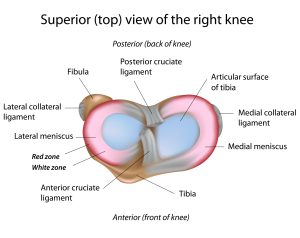
- Synovial Fluid Activation: Synovial fluid is thick and gel-like at rest but becomes thinner and more lubricating with movement (called thixotropy). When you jump straight into box jumps without warm-up, the fluid is still viscous and can’t coat joint surfaces effectively. This increases friction and shear stress on the meniscus.
- Proprioceptive Priming: Your knee has thousands of mechanoreceptors that detect position and movement. These communicate with your quads and hamstrings to stabilize the knee and prevent excessive tibial rotation—the primary mechanism of meniscus tears. Without activation, these receptors are sluggish and your muscles don’t fire quickly enough during landings.
- Temperature and Compliance: Collagen fibers in your meniscus become more flexible as temperature increases. Cold, stiff collagen is more likely to tear under load. For HIIT athletes training at Centennial gyms early in the morning or during Colorado winters, this temperature factor is critical.
The Three Warm-Up Mistakes That Increase Meniscus Risk
Mistake 1: Static Stretching Before Dynamic Movements
Holding deep static stretches (like pigeon pose for 90 seconds) before training can temporarily inhibit neural drive to your glutes and hamstrings. Research shows this reduces dynamic knee stability during explosive movements. Your stretched muscles don’t fire as powerfully, leaving your meniscus more vulnerable during box jumps and Olympic lifting.
Static stretching has its place after training, but before high-intensity work, it compromises the stability mechanisms that protect your knees.
Mistake 2: Ignoring the Joints Above and Below
The knee is a “slave joint” to the hip and ankle. If you have stiff ankles with limited dorsiflexion, your knee is forced to rotate internally and collapse inward (valgus) to achieve squat depth. This valgus collapse grinds the meniscus.
Similarly, if your hips lack internal rotation, your knee compensates by rotating excessively. Most warm-ups at CrossFit boxes in Greenwood Village and South Denver completely neglect ankle and hip mobilization.
Mistake 3: Zero-to-100 Plyometrics
Jumping straight into high box jumps subjects the meniscus to massive compressive forces before the joint is properly lubricated and stabilizing muscles are activated. Your tendons and ligaments need progressive loading to function optimally.
The Meniscus-Protective Warm-Up Protocol (10-15 Minutes)
Here’s the exact protocol we teach athletes at Kinetic Sports Medicine in Centennial. This can be done before any HIIT class at your CrossFit box, F45 studio, or Orangetheory gym.
Phase 1: General Movement (2-3 Minutes)
- Activity: Assault bike, rower, or SkiErg at moderate pace (60-70% effort).
- Why it works: Increases blood flow to the joint capsule, triggering synovial fluid production and beginning the gel-to-liquid transition.
Phase 2: Region-Specific Mobility (3-4 Minutes)
- 90/90 Hip Flow (10 reps)
- Sit with both legs in 90-degree angles, rotate hips side to side.
- Improves hip internal rotation so your knee doesn’t compensate during squats.
- Weighted Ankle Dorsiflexion (10 reps per side)
- Kneel on one knee, drive front knee over toes while keeping heel planted.
- Increases ankle range to prevent valgus collapse.
Phase 3: Activation Exercises (3-4 Minutes)
- Spanish Squat Holds (2 sets of 30-45 seconds)
- Heavy band behind knees attached to rig, sit back keeping shins vertical.
- Activates quads without compressing the patellofemoral joint.
- Single-Leg Glute Bridges (2 sets of 12 per side)
- Lying on back, one knee bent, drive hips up.
- Engages hamstrings and glutes to prevent anterior tibial shearing.
Phase 4: Activity-Specific Prep (2-3 Minutes)
- Drop Squats (2 sets of 10 reps)
- Stand tall on toes, aggressively drop into quarter-squat landing.
- Teaches quick force absorption and instant knee stabilization.
- Pogo Hops (2 sets of 15 seconds)
- Small, quick hops emphasizing minimal ground contact.
- Prepares tendon stiffness for plyometric work.
The Science Behind This Protocol
A 2018 systematic review in the British Journal of Sports Medicine found that neuromuscular training warm-ups incorporating balance, strength, and agility reduced ACL and knee injury rates by over 50% compared to standard warm-ups.
Research by Behm et al. confirms that dynamic stretching improves power output and range of motion, whereas static stretching before power activities decreases performance and stability.
How Sports Chiropractors in Centennial Approach Knee Health
At Kinetic Sports Medicine and Rehab, our sports chiropractors view knee health through a “core-to-extremity” lens using Dynamic Neuromuscular Stabilization (DNS) principles.
Your knee’s health depends on your body’s ability to create intra-abdominal pressure (IAP) through proper diaphragm and pelvic floor function. If your core isn’t stabilizing optimally, your knees suffer from poor neurological control.
This warm-up protocol activates the core before loading the extremities. The Spanish squat holds teach your body to maintain IAP while your knees are under load—exactly what you need during heavy squats or box jump landings.
We frame this warm-up as “preparation for high performance,” not “protection because you’re fragile.” Athletes who view warm-ups as performance optimization approach training with confidence and paradoxically reduce injury risk while improving performance.
Adapting the Protocol for Different Situations
- Cold Weather (Colorado Winters): Extend general movement to 5 minutes and wear knee sleeves during warm-up to retain local heat.
- Early Morning Training (6 AM Classes): Synovial fluid is more viscous after sleep. Spend double time on Phase 2 mobility, especially ankles and hips.
- Previously Injured Knees: Add a wall sit or Spanish squat at the very start. Isometric contractions can induce pain relief through neurological mechanisms.
- Competition Days: Shorter duration (8-10 minutes), higher intensity to ramp up the nervous system without causing fatigue.
Time-Crunched Version (5 Minutes)
You’re running late to your F45 class in Greenwood Village. You have 5 minutes before the workout starts. Don’t skip the warm-up entirely—do this abbreviated version:
- Air Bike Sprint (1 minute): Hard effort to spike core temperature quickly.
- Spanish Squat Hold (90 seconds): Maximum quad recruitment and joint preparation.
- Lateral Lunges (90 seconds): Hits hip mobility and single-leg stability simultaneously.
- Drop Squats (1 minute, 10 reps): Wakes up landing mechanics and proprioception.
This 5-minute version isn’t ideal, but it covers the essential elements: temperature increase, quad activation, hip mobility, and landing preparation. It’s exponentially better than no warm-up at all.
How Sports Chiropractors Optimize Your Warm-Up Effectiveness
Regular treatment with a sports chiropractor in Centennial creates the optimal tissue environment for your warm-up to work effectively.
- Chiropractic Joint Mobilizations: Sports chiropractors mobilize the talus (ankle bone) and hip capsule, ensuring joints aren’t mechanically restricted. If your ankle joint is stuck, no amount of warm-up stretching will improve your dorsiflexion. You need manual treatment first.
- Sports Massage: Targets the IT band, quadriceps, and hamstrings to reduce excessive tension pulling on the knee joint. Athletes often report that their warm-up mobility work feels dramatically different after sports massage—movements that were previously restricted suddenly become accessible.
- Dry Needling: Releases trigger points in the popliteus (the muscle that “unlocks” the knee) and lateral quadriceps, which often create compressive tension on the meniscus.
- Shockwave Therapy: If you have chronic meniscal irritation (clicking, catching, mild discomfort), shockwave therapy stimulates a healing response even in avascular zones of the meniscus, making the tissue more robust during training.
Common Questions About Warm-Up and Knee Health
How long does this warm-up take? The full protocol takes 10-15 minutes. Most CrossFit classes in Centennial have built-in warm-ups, so you can do this beforehand without doubling your time investment.
Can I do this if I already have knee pain? This warm-up can help with early-stage knee discomfort, but schedule an evaluation with a sports chiropractor to determine if you have an underlying issue needing treatment.
What if my gym’s warm-up is only 5 minutes? Show up 10 minutes early and do this protocol on your own. Your knees are your responsibility. Use the time-crunched version: 1 min bike sprint, 90 sec Spanish squat hold, 90 sec lateral lunges, 1 min drop squats.
Will this improve my performance? Absolutely. Athletes consistently report better squat depth, more powerful jumps, and more confident landings. Injury prevention and performance optimization are the same thing.
Your Knees Deserve Better Than a 2-Minute Jog
The meniscus is remarkably resilient when properly prepared and catastrophically vulnerable when neglected. At Kinetic Sports Medicine and Rehab in Centennial, our sports chiropractors see the pattern repeatedly: athletes who invest 10-15 minutes in proper warm-up train harder, longer, and with fewer injuries than athletes who skip this preparation.
Your knees will carry you through thousands of box jumps, heavy squats, and explosive movements—if you prepare them properly. This protocol is your insurance policy against the meniscus tears, chronic pain, and forced time off that plague HIIT athletes who neglect the fundamentals.
Schedule Your Movement Assessment with a Sports Chiropractor in Centennial
Whether you’re preventing knee issues or addressing early warning signs (clicking, instability, mild discomfort), a comprehensive movement assessment can identify your specific vulnerabilities.
At Kinetic Sports Medicine and Rehab, our sports chiropractors evaluate ankle mobility, hip rotation, core stability, and landing mechanics to create personalized warm-up strategies that address your unique limitations.
Your assessment includes:
- Comprehensive joint mobility evaluation with a sports chiropractor
- Movement screening for valgus collapse, tibial rotation, and landing mechanics
- Identification of muscle imbalances contributing to knee stress
- Personalized warm-up protocol based on your training goals
- Treatment including sports massage, dry needling, and joint mobilization to address restrictions
Stop gambling with your knee health. Get the assessment that shows you exactly what your knees need for years of high-intensity training.
Kinetic Sports Medicine and Rehab
Centennial, Colorado
80112
Phone: 720-709-1894 (text or call)